Credits: Event Horizon Telescope collaboration et al.
The most beautiful thing we can experience is the mysterious. It is the source of all true art and science. - Albert Einstein
The year of black holes
For most people, 2020 will be remembered as the year that a pandemic raged across the globe killing hundreds of thousands and disrupting many lives. It was the year of social and political upheaval culminating in a contentious US election. But it was also the year that Black Hole research received the recognition that it deserved. The 2020 Nobel Prizes in Physics were awarded to Sir Roger Penrose, Andrea Ghez, and Reinhard Genzel for their pioneering work on Black Holes. In announcing the prizes the Nobel committee stated that half of the Nobel Prize was awarded to Roger Penrose "for the discovery that black hole formation is a robust prediction of the theory of relativity". This post will try to unpack this statement and provide an intuitive feeling for the uninitiated reader of Penrose's remarkable work. The discovery in question refers to a short 2-1/2 page paper entitled "Gravitational Collapse and Singularities" that Penrose published in January of 1965 in the journal "Physical Review Letters". In this paper, Penrose provided rigorous mathematical proof that under certain conditions the formation of a singularity in space-time is unavoidable. What is a singularity and what does it have to do with black holes? A singularity is a place and time where something really "bad" happens. It could be things like the curvature of space-time "blowing up" to infinity or a "tear in the very fabric of space-time". For example, a sufficiently massive object could collapse under its own gravitational force, and if there is nothing to resist the collapse it could distort space-time so badly that its curvature could end up becoming infinite.But such descriptions are somewhat misleading. What it really means is that there is a breakdown in the physical theory, and that a broader theory is needed to explain what is going on. Singularities don't have to be associated with points of infinite curvature. For example, in the case of the Big Bang, things seem to come out of nowhere, meaning particles don't have a history beyond a certain point in time in the past. Similarly, in the interior of a black hole particles or light rays could reach a point beyond which spacetime simply ceases to exist.
Penrose Lecturing on the Big Bang in Berlin, 2015
Incidentally, any mention of Penrose's work and singularities would be incomplete without mention of Stephen Hawking. As portrayed in the movie "The Theory of Everything" both were young graduate students at Cambridge when Penrose made his discovery on singularities. Hawking immediately understood the significance of Penrose's work and applied it to Cosmology and the Big Bang. By essentially reversing the time direction of Penrose's argument, Hawking was able to prove that there had to be a singularity at the time of the Big Bang (the birth of space and time!). Both Penrose and Hawking were awarded the prestigious Adams Prize in 1966 for their research. They then went on to collaborate and publish a series of singularity theorems that are now collectively known as the Hawking-Penrose theorems. Hawking became an iconic figure in Science who overcame a debilitating disease (ALS) to make groundbreaking discoveries in physics. It is unfortunate that Hawking died in 2018, else he would have surely shared the Nobel prize with Penrose.
In the next couple of sections, we will discuss the history of black holes and singularity research prior to Penrose's publication of his 1965 paper.
The Schwarzschild Singularities
In 1915 Albert Einstein made history when he presented his General Theory of Relativity to the Prussian Academy of Sciences. Newspapers around the world hailed the discovery as the most important since Newton and Einstein became a household name. It heralded the dawn of a new era in Science with a new and transformed understanding of the universe. Just one month after the publication of his results on space, time, and gravitation, Einstein was stunned to receive a postcard from a lieutenant in the German army containing the first-ever exact solutions to his field equations of gravitation. Einstein's equations are highly non-linear differential equations and notoriously difficult to solve. Einstein had only been able to supply an approximate solution in the context of the planetary motion of Mercury. But here was a postcard from someone posted at the Russian front that said"As you see, the war treated me kindly enough, in spite of the heavy gunfire, to allow me to get away from it all and take this walk in the land of your ideas."Karl Schwarzschild was the Director of the Astrophysical Observatory in Potsdam, but as a patriot had decided to join the army to fight in the war. During breaks from the fighting on the Russian front, he had managed to find the time to not only read Einstein's latest papers but also solve Einstein's equations for the space-time surrounding a spherically symmetric, non-rotating, non-charged body. Einstein was impressed and replied "I have read your paper with the utmost interest. I had not expected that one could formulate the exact solution of the problem in such a simple way. I liked very much your mathematical treatment of the subject. Next Thursday I shall present the work to the Academy with a few words of explanation".
Schwarzschild's postcard to Einstein and his metric
Elegant and beautiful as Schwarzschild's solution was, it had a problem. There were two singularities in it, one at the center of the body at radius r=0 and one at the radius r=2GM/c^2, known today as the gravitational radius (or Schwarzschild radius). Here G is Newton's gravitational constant, M is the mass of the body and c is the speed of light. At these two points the solutions "blew up", meaning that they shot up to infinity. Einstein did not consider these singularities as physically meaningful. In fact in the spirit of classical electrostatic and Newtonian gravitational potentials, he made the assumption that the Schwarzschild solution applied only outside the spherical region of radius r=2GM/c^2. It is unclear what he expected to happen inside that sphere, but he considered them mathematical pathologies that had no physical meaning. In fact, Einstein was wrong to dismiss the singularity at the Schwarzschild radius. Today, the sphere at this radius is known as the "event horizon" of a black hole. Inside this spherical region, nothing can escape the gravitational attraction towards the center. The escape velocity exceeds the speed of light, so even light cannot escape, hence the term "black hole". As for the singularity, it was discovered by Arthur Eddington and David Finkelstein that it was indeed just an artifice of the choice of coordinates used by Schwarzschild. Eddington and Finkelstein showed that the singularity could be "transformed away" by simply choosing a different set of coordinates (now known as the Eddington-Finkelstein coordinates). However, r=0 was still a bonafide singularity and could not be transformed away. That did not cause any worry for Eddington or anyone else since the mass was centered at r=0, so the belief was that the field equations did not apply there.
Collapsing Stars
The first sign of trouble came in 1929 when a 19-year old Indian astrophysicist named S. Chandrashekhar performed some calculations on the final fate of stars on his sea voyage from India to England. The prevailing wisdom at that time was that a star that had spent all its nuclear fuel, would start collapsing causing outgoing shockwaves that would eject its outer shell in a "supernova explosion".
SN2018gv observed by the Hubble telescope
The inner core of such a collapsing star would settle into a stable object known as a white dwarf. It was believed that the white dwarf was prevented from further collapsing by something known as the "electron degeneracy pressure". In essence, the electron degeneracy pressure is a consequence of the Pauli exclusion principle in quantum mechanics which states that no two electrons can be in the same quantum state at the same time. So if you squeeze a collection of cold electrons in a small space, their repulsion due to Pauli exclusion principle and the electrostatic repulsion would result in an outward-facing pressure. The famous astrophysicist Ralph Fowler had shown that the electron degeneracy pressure was sufficient to resist the gravitational force and prevent the white dwarf from collapsing into itself. In doing so he ignored the relativistic motion of particles. Chandrashekhar produced a "relativistic degeneracy formula" that showed that if the star's mass was greater than 1.4 times the solar mass, then the electron degeneracy pressure was insufficient to prevent the star from collapsing beyond a white dwarf. This implied that the star would keep shrinking and collapsing ad infinitum. This was a startling and highly disconcerting discovery. While most experts including Fowler believed that Chandra's results were correct, Arthur Eddington who was highly influential at that time reacted with derision. At a conference in 1935, Eddington told his audience that Chandrasekhar's work “was almost a reductio ad absurdum of the relativistic degeneracy formula. Various accidents may intervene to save a star, but I want more protection than that. I think there should be a law of Nature to prevent a star from behaving in this absurd way!” Roger Penrose gave a nice talk on the topic, where he made the point that even though Chandrashekhar was correct in his calculations, Eddington was also right in believing that something in nature should prevent a star from collapsing indefinitely. Penrose does point out that Chandrashekhar (who was of a conservative bent of mind) was careful not to speculate about the eventual state of such an endlessly collapsing star. And it is known today that Eddington was wrong about the relativistic degeneracy formula. By dismissing Chandra's work, Eddington may have delayed much-needed research in the area of stellar collapse.
Penrose talking about Chandra
Chandrashekhar was eventually vindicated in his work and today the size of 1.4 solar mass is called the Chandrashekhar limit (Chandra also won the Nobel prize in Physics in 1983 for his work on the structure and evolution of stars). Meanwhile, Walter Bade and Fritz Zwicky proposed the existence of a neutron star just two years after the discovery of the neutron by James Chadwick in 1931. They predicted that a bigger star could squeeze the electrons and protons together to form neutrons which would generate a "neutron degeneracy pressure" that would resist runaway gravitational collapse in a manner similar to the electron degeneracy pressure. In 1939, Oppenheimer and Volkoff calculated an upper bound to the mass of cold, nonrotating neutron stars, analogous to the Chandrashekhar limit for white dwarf stars. This is known today as the Tolman-Oppenheimer-Volkoff limit and is estimated to be between 1.5 and 3 solar masses.
But what if the mass was greater than 3 solar masses. Was there a "law of Nature" as Eddington expected that would prevent a star from collapsing indefinitely? In a 1939 paper entitled "On Continued Gravitation Contraction", Oppenheimer and Snyder showed, that a spherically symmetric ball of gas of sufficient mass would necessarily collapse beyond the stage of a neutron star. In their words "When all thermonuclear sources of energy are exhausted a sufficiently heavy star will collapse. Unless fission due to rotation, the radiation of mass, or the blowing off of mass by radiation, reduce the star's mass to the order of that of the sun, this contraction will continue indefinitely." They further showed that "the radius of the star approaches asymptotically its gravitational radius; light from the surface of the star is progressively reddened and can escape over a progressively narrower range of angles". In essence, they showed that for a spherically symmetric ball of gas, the gravitational collapse will result in infinite density and the creation of an event horizon in finite time.
The 1965 Paper
The reception to the Oppenheimer-Snyder paper was lukewarm due to the assumptions made about spherical symmetry. Ironically, at about the same time Einstein published a paper claiming that singularities could never form in General Relativity. His paper contained a mistake. Until Penrose's 1965 paper, there was a question as to whether objects like black holes and singularities were mathematical pathologies that could never exist in nature. The Russians Kalatnikov and Lifshitz claimed to have proved that singularities could not occur in cosmology. Their paper contained an error that was later corrected by Belinski. But it did not constitute a categorical proof that singularities could not occur and Penrose himself was skeptical of their methods. The objection towards assumptions made in prior work is best articulated by Penrose himself in his 1965 paper:
"The question has been raised as to whether this singularity is, in fact, simply a property of
the high symmetry assumed. The matter collapses radially inwards to the single point at the
center, so that a resulting space-time catastrophe there is perhaps not surprising. Could not
the presence of perturbations which destroy the spherical symmetry alter the situation
drastically? The recent rotating solution of Kerr [also possesses a physical singularity, but
since a high degree of symmetry is still present (and the solution is algebraically special), it
might again be argued that this is not representative of the general situation. Collapse
without assumptions of symmetry will be discussed here."
There are a few notable facts about Penrose's result.
Penrose makes a very generic argument without making any assumptions of symmetry. Unlike prior results on black holes and singularities, which rely on explicit solutions of Einstein's equations, Penrose's work makes use of differential topology and global methods in geometry.
Second, Penrose gives a very precise definition of singularity which is broader than the usual definition based on infinite curvature. Specifically, Penrose uses a concept in differential geometry called "geodesic incompleteness" as a proxy for the presence of singularities. Incompleteness means you cannot go past a certain point in space-time, which is an indication of a breakdown in the predictability of space-time.
Third, Penrose's result is a negative statement in the sense that it simply says that under certain reasonable assumptions about space-time and gravitational collapse, space-time has to become incomplete. It says nothing about where exactly the completeness breaks down and it does not even make any claim about the nature of the singularities that would lead to such incompleteness. However, what Penrose's paper does do is provide rigorous mathematical proof that incompleteness is inevitable if certain reasonable conditions are met.
With regard to the implications of his result, Penrose makes this intriguing remark. "If, as seems justifiable, actual physical singularities in space-time are not to be permitted to occur, the conclusion would appear inescapable that inside such a collapsing object at least one of the following holds: (a) Negative local energy occurs. (b) Einstein’s equations are violated. (c) The space-time manifold is incomplete. (d) The concept of space-time loses its meaning at very high curvature – possible because of quantum phenomena. In fact (a), (b), (c), (d) are somewhat interrelated, the distinction being partly one of attitude of mind."
Geodesic Incompleteness
Geodesics refer to the "straightest possible" curves on a surface. For example, a straight line is a geodesic on a flat plane. The longitudinal lines on a sphere (great circles) are geodesics. They are curves of extremal (maximum or minimum) length between two points. Typically one thinks of the shortest path between two points. However, in space-time, it is more appropriate to consider the time it takes for an object or a signal to travel between two points (events). In General Relativity, freely falling bodies in a gravitational field follow geodesics. In addition light rays also follow geodesics. They are the analogs of "straight" lines on the plane.
Penrose's diagram showing a singularity
A surface or a manifold is said to be geodesically complete if starting at any point p you can follow a smooth path indefinitely in any direction. A plane and a sphere are both geodesically complete. But if you remove a point from the plane ("punctured plane") you get a geodesically incomplete space. If you follow a straight line going towards the missing point at a certain speed, then after a finite amount of time you will hit the puncture ad you cannot go any further. You can think of the point that is removed as the singularity. Of course, a punctured plane is an artificial example, because it resides in an ambient smooth space namely the plane and one can remedy the incompleteness by simply adding back the point. But in general, that may not be possible. In differential geometry, you can define manifolds without immersing them in a larger space. If you follow a geodesic path and the path cannot be continued after a certain point, then the manifold is said to be geodesically incomplete. For example, a light ray or a spaceship moving towards the center of a Schwarzschild black hole will not have a future after a finite amount of time because it will encounter the singularity at r=0. Time and space literally come to an end at that point. Penrose has a rather amusing footnote in relation to his reference to space-time incompleteness: "The “I’m all right, Jack” philosophy with regard to singularities would be included under
this heading!" "I'm all right, Jack" is a well known English expression indicating smug and complacent selfishness. It was also the title of a well known British movie starring Peter Sellers. Clearly, singularities are not very accomodating when it comes to letting things and signals from getting through. Technically speaking Penrose's singularity theorem should truly be called "Penrose's Incompleteness Theorem".
The Singularity Theorem
Penrose's paper is a mathematician's dream to dig into. But sadly for the uninitiated, it would be daunting to comprehend as it uses sophisticated mathematical concepts. The physicist Ed Witten said jokingly in a lecture that there are a small set of ideas in the paper that if understood would make even the uninitiated an expert. However, Witten's comment is addressed to his colleagues at the Institute for Advanced Study who could be called anything but uninitiated.
Witten's lecture at IAS on singularities
Regardless of my misgivings about Witten's assessment, I will attempt to convey the key ideas Penrose's theorem and its proof. Penrose lists five assumptions, which by themselves are reasonable but together lead to a mathematical inconsistency. The five assumptions are as follows:
"Past and Future": Space-time is a smooth manifold with a clear definition of past and future everywhere.
"Null Completeness": Every path built out of light rays can be extended indefinitely into the future.
"Cauchy hypersurface condition": Initial condition of space based on the distribution of matter allows one to determine its evolution over time (in relativity space-time is a dynamical entity that evolves with time). A Cauchy surface is a "nice" initial surface in space-time that can be used to predict the future dynamic evolution of spacetime. Penrose makes a crucial assumption that there exists a "non-compact" Cauchy hypersurface. Non-compact Cauchy hypersurface means a 3-dimensional surface that extends out to spatial infinity. For example, if there is a "non-compressed" spatial distribution of matter and energy, then locally space will be curved but it will be surrounded by "flat" space that extends out to infinity.
"Non-negativeness of local energy": The local geometry of space-time is affected by the local distribution of energy. The non-negativeness of energy implies the non-negativeness of curvature. This is essentially stating that gravity is an "attractive force".
"Trapped surface": This is the one and only assumption that is unique to a black hole situation. Trapped surfaces are special types of spherical surfaces where all light rays that emerge from them start bending towards each other. In general, outgoing light rays will spread out from the surface of a sphere. But behind an event horizon gravity is so strong that space itself is shrinking with time. If the shrinking of space is faster than the spreading of light, then over time the light rays will start focusing towards each other. The great advantage that trapped surfaces have over previous approaches to singularities is that they are robust to small perturbations away from spherical symmetry. So even if the space-time is distorted so that it is not spherically symmetric, trapped surfaces will continue to form behind the event horizon.
As a consequence, if we assume that assumptions 1, 3, and 4 are true and if we assume the presence of a trapped surface (assumption 5), then we have to conclude that assumption 2 is false, which implies that incompleteness of space-time is inevitable. So stated more simply Penrose's theorem states that for any reasonable space-time where the matter is distributed in a concentrated region of space and space-time becomes close to "flat" as we move away from that region, the presence of trapped surfaces will inevitably result in the incompleteness of space-time (aka singularities). We will discuss these assumptions in more detail and the proof of Penrose's theorem in Part 2 of the article.
Sometime in March of 2019, my colleague Howard Dierking asked me if I was interested in talking about my mathematical journey to a group of high school students. His wife Jennifer taught at the Bear Creek School in Redmond. She was looking to expose her kids to some outside perspectives on academia and research. She had a good reason for it - the students in her class were precocious. Rather than talk purely about my journey into Math, I thought I would mix relativity and geometry and throw in some fun facts about topology, gravitational waves, and GPS satellites. These were all topics that I was fascinated by. I was intrigued by the fact that an esoteric subject like General Relativity has a very practical application to location tracking via GPS satellites. Anyone who has used turn-by-turn directions on their smartphone knows the importance of accurately tracking one's location. Moreover, if you are in a plane that is landing using autopilot you know your life depends on the accuracy of those GPS satellites. But did you know that there are corrections that need to be made to the formulas to account for Special and General Relativistic effects? Time slows down when things travel fast such as the GPS satellites for instance. Time also goes faster the farther you are from the earth's gravitational field. For accurate triangulation of the location of a device, the devices on the GPS satellites will apply these relativistic corrections. Else your location will be subject to drift and you may end up very from where you need to be! To learn about some of these topics take a look at this slide presentation.
One of the most fascinating aspects of the Einstein Conference in Berlin was an exhibition at the basement of the Harnack Haus where Einstein's original manuscripts on GR were put on display. These manuscripts were loaned by the Hebrew University of Jerusalem to the Max Planck Society for the occasion. It was a joy to browse through the manuscripts and see the development of ideas that led to Einstein's discovery. It contains Einstein's explorations, false starts, mistakes, corrections, and his eventual triumphant discovery of the field equations of gravitation. It is a remarkable record of the creative process of a genius whose discovery made front-page news around the world and shook up the world of physics. The Exhibition shows Einstein having the "happiest thought of his life" when he realized that the principle of equivalence was really the reflection of a geometric property of space-time. Einstein realized that he needed new mathematics to turn his ideas into equations. Einstein had dismissed his teacher Hermann Minkowski's geometric reframing of special relativity in terms of 4-dimensional space-time and light cones as "superfluous erudition". Maybe it was because Minkowski had called him a lazy dog with a lackadaisical attitude towards Mathematics. But the problem of Gravitation made Einstein appreciate the value of the geometrical approach. In fact, it became his main approach to his attempts to unify gravitation and electromagnetism which lasted all the way until his death. The manuscripts show Einstein learning the basics of Riemannian geometry with the help of his childhood friend Marcel Grossman. His early attempts at constructing the equations of gravitation using the scalar curvature failed. He started again and as he was getting close, he realized to his alarm that the great David Hilbert was close to finding a solution to the problem. Hilbert had started working on uncovering the field equations for gravitation after listening to some lectures by Einstein in Goettingen. Hilbert's approach was based on variational principles. Einstein's realized to his dismay that his decade long mission to find new equations of gravitation would be completed by Hilbert. A lot was at stake, so he doubled down. In the end, they were both very close to each other in publishing their results. But Hilbert was gracious enough to give Einstein the full credit for the discovery. Einstein also later published a variational derivation of the field equations of gravitation. In fact, the name Einstein-Hilbert action is given in honor of both of these giants of science.
I created this slide presentation for a college reunion in 2016 in honor of a beloved Mathematics professor who was retiring that year. Several of Dr. Shobha Madan's former students who were accomplished mathematicians had gathered at IIT Kanpur to present talks in their areas of expertise. I was the only "non-academic" person and the only one to attend from outside India. And I chose to speak on an academic topic. So go figure. But it was a wonderful experience. Anyway, here is the slide deck.
Some of the greatest insights in physics have come out of paradoxes and incompatibilities between well-established theories of nature and newly observed phenomena. In Part 1of this blog, we saw the development of classical physics up to the 19th century. At the dawn of the 20th century, it was widely believed that the end of physics was near. Lord Kelvin, a pre-eminent physicist of the day is said to have famously pronounced (in a possibly apocryphal event) "There is nothing new to be discovered in physics now, all that remains is more and more precise measurement". Newton's laws were spectacularly successful in describing the motion of bodies, both earthly and celestial. The macroscopic and thermodynamic properties of matter could be explained in terms of the statistical behavior of atoms that obeyed Newtonian mechanics. Maxwell's equations gave a complete mathematical description of electromagnetic phenomena. While Faraday's original formulation of electromagnetic theory did not postulate any medium for the transmission of electromagnetic fields, it was widely believed that an all-pervading material called the aetherwas the medium for electromagnetic phenomena. Even Maxwell is said to have believed that electromagnetic waves traveled as oscillations of the aether. Also, classical physics at the turn of the century rested on the twin foundations of causality and determinism. These principles demanded that given initial conditions, the dynamic evolution of any system is governed by physical laws that can be expressed by differential equations, whose solutions allow precise calculation of positions and velocities of particles involved in the dynamics of the system. However, there were some ominous clouds gathering over the prevailing sense of completeness and finality in the subject. Attempts to fit the Faraday-Maxwell theory of electromagnetism into the mechanistic framework of the aether were ad hoc at best. No experiment could detect the all-pervading aether. Precise experiments such as those of Michelson and Morley failed to detect any changes in the speed of light due to the earth's motion through the aether (unlike for example the change in the speed of sound due to the motion of the sound source through the air). There were other vexing astronomical anomalies such as the perihelion motion of Mercury's orbit. On the earthly front, the existing wave theory of light could not explain the photoelectric effect, where light shining on a metal resulted in the production of an electric current whose energy depended only on the frequency of the light as opposed to the intensity of the light. There were still many questions about the existence of atoms, their structure, and their relationship to radiation phenomena. But what triggered the quantum revolution was the problem of "black body" radiation.
The Quantum Revolution
A black body is one that absorbs all the light falling on it. When a black body is heated it starts to radiate and a major problem in theoretical physics was to derive the observed spectrum of the radiation using known laws of physics. A theoretical model created by Rayleigh and Jeans based on the classical theory of electromagnetism produced the paradoxical result that the energy emitted by the body would grow indefinitely as a function of frequency. This divergence was called the 'ultraviolet catastrophe' by the physicist Paul Ehrenfest. Max Planck overcame this paradox in 1900 by postulating that energy could only be exchanged in discrete units called "quanta". A quantum of energy is related to the frequency of the emitted radiation via the famous Planck's constant h. Using his equation Planck was able to produce the observed distribution of radiation energy as a function of radiation frequency and temperature. Planck was of a conservative bent of mind and by his own admission hardly a revolutionary. But he had the courage to go where the problem took him and make a counter-intuitive postulate in order to resolve a paradox. But Albert Einstein in a fashion typical of him took what was an ad hoc postulate and generalized it to a universal property of light itself (and all electromagnetic radiation). He postulated that light consists of packets of energy called photons, which carry momenta and energy that can knock electrons off certain metals resulting in the photoelectric effect. This was a dramatic development since Thomas Young had disproved in 1800 Newton's assertion that light consisted of corpuscles by demonstrating the interference of light using the double-slit experiment. The wave theory of light had been an established fact for more than half a century and had gotten an additional boost from Maxwell's theory of electromagnetism. But here was Einstein postulating that light consisted of particles. Einstein of course knew that this implied the paradoxical statement that light was both a wave and a particle. He hoped that a deeper theory of nature would resolve this paradox. Little did he know that the theory that would eventually emerge would go against his deepest beliefs about nature. Quantum mechanics got another early boost from Niels Bohr's work on atomic theory. Early models of the atom such as Rutherford's planetary model suffered from the uncomfortable fact that they violated known laws of electromagnetism. Unlike planets revolving around the sun, an electron revolving around a nucleus should radiate energy and fall into the nucleus. This led Bohr to conclude that the stability and spectrum of atoms could best be explained by postulating that electrons in an atom can assume only certain discrete energy states. The observed line spectra of gases such as Hydrogen could then also be explained as the result of transitions between these discrete energy states (quantum jumps). The hallmark of early quantum theory was the realization that when it comes to atomic and radiation phenomena, energy is not a continuous entity (as in classical physics) but comes in discrete "lumps" (terminology used by Richard Feynman - see Feynman Lectures in Physics Vol. 3). Numerous attempts to fit this realization into known classical models of electromagnetic theory and Newtonian mechanics met with failure. In the early 1920s, de Broglie and Schrödinger developed a wave theory of matter that carried a tremendous intuitive and visual appeal to classical physicists. Schrödinger's famous equation was also a major milestone that allowed one to describe the time evolution of a system using a "state vector" known also as the wave function. Schrödinger's interpretation of the wave function was in terms of physical "matter waves". But it became clear over the next 2 decades largely due to the work of Heisenberg, Pauli, Max Born, and most importantly Niels Bohr, that all visual and classical ideas of nature had to be abandoned when it came to atomic phenomena. The consensus that emerged (known as the Copenhagen Interpretation) was that wave and particle were complementary aspects of nature that manifested themselves depending upon the kind of experiment that was being performed. All measurements carry an inherent uncertainty where dual observables such as position and momenta cannot be simultaneously measured with unlimited precision. The wave function itself is an "infinite-dimensional" mathematical entity, whose only physical interpretation is that its "modulus square" represents the probability of finding a particle at a location during a measurement. Interestingly the author of this probabilistic interpretation of quantum mechanics (Max Born) attributed the idea originally to Einstein, who had suggested in an unpublished manuscript that the wave nature of light actually represented a "wave of probabilities" of photons. However, Einstein believed that these probabilities applied to an ensemble of photons and not to an individual photon. When it came to individual particles, Einstein firmly believed that deterministic laws would apply. On the other hand, Max Born's interpretation of the wave function and the later Copenhagen interpretation of quantum mechanics asserted that determinism did not apply to atomic phenomena. When it came to atomic measurements one could only speak in terms of probabilities. Einstein never accepted this "probabilistic" interpretation of quantum mechanics and maintained till the end of his life that "God does not play dice with the universe". The debates that raged between Bohr, Heisenberg, Schrödinger, and Einstein could be counted as one of the greatest philosophical debates of all time. The Copenhagen interpretation of quantum mechanics is widely accepted by physicists today with some notable exceptions.
As Feynman stated in his numerous lectures, it is safe to say that nobody really understands quantum mechanics. Niels Bohr, one of the founding fathers of quantum theory stated that anyone who is not shocked by quantum mechanics has not really understood it. But it is indeed one of the most successful theories of nature and is the foundation of much of modern physics and technology. Quantum mechanics plays a foundational role in solid-state physics, condensed matter physics, the theory of superconductivity, nuclear physics, stellar evolution, particle physics, modern chemistry, and even modern biology. Today's technology including semiconductors, lasers, MRI machines, electronics, etc. would not be possible without quantum mechanics.
Even when he was wrong, Albert Einstein was remarkably prescient and insightful. His ingenious thought experiments aimed at showing that Quantum Mechanics was incomplete, culminated in the famous EPR (Einstein-Podolski-Rosen) paper that highlighted the "spooky non-local" nature of quantum entanglement of particles separated by large distances. However, entanglement is a fundamental and experimentally verified aspect of quantum mechanics. It is an active area of research in both physics and quantum information theory today.Quantum mechanics is also penetrating other areas of knowledge such as information science and computing. Research labs around the world are racing to build the first quantum computer. Such a development would transform computing and communication as we know it.
Relativity
At the turn of the 20th century, it was realized that Maxwell's equations had the strange property that the speed of an electromagnetic wave (such as light for example) seemed to be the same in all frames of reference. This was clearly incompatible with the intuitively obvious concept of relative motion. For instance, two trains moving at the same speed in the same direction appear to be at rest relative to each other. Not so with light, which seemed to travel at a fixed constant speed of 186,000 miles/sec irrespective of the speed of the observer. The speed of light (c) shows up in Maxwell's equations as a constant number that can be computed from the electrical permittivity and magnetic permeability of empty space. Maxwell himself assumed that this speed must be relative to an absolute frame of reference namely the aether. The Michelson-Morley experiment of 1887 failed to measure any movement of the earth relative to the aether. Their experiment showed that light traveled at exactly the same speed both parallel and perpendicular to the motion of the earth (which contradicted the hypothesis of a drag in the aether caused by the earth's motion). Nobody appreciated the constancy of the speed of light more deeply than Albert Einstein. After all, as a teenager, he had performed a Gedankenexperiment (thought experiment) of racing behind a ray of light and wondering what he would see. Common sense indicated that he should see a standing light wave, but that seemed to violate Maxwell's equations. Einstein was also aware of Galileo's discovery of "inertial frames of reference" and the "principle of relativity". Galileo had shown that there was no fundamental difference between a frame of reference at rest and one at uniform motion relative to it. In other words, no experiment conducted within a uniformly moving frame of reference can tell whether it is at rest or at motion. So all uniform motion seems to be relative and all laws of physics should be the same in all inertial frames of reference. Einstein in 1905, resolved the paradox of the constancy of the speed of light in all frames of reference by developing a new theory of space and time called the "Special Theory of Relativity". By elevating the "Principle of Relativity" and "the Constancy of Speed of Light" to the status of fundamental postulates, Einstein derived a host of consequences that transformed our understanding of simultaneity of events, lengths of objects, and time intervals. In Einstein's theory, space and time lost their absolute and independent nature and blended into a 4-dimensional continuum called spacetime whose geometry was such that no signal could travel faster than the speed of light. The mathematician Hermann Minkowski announced rather dramatically in a 1908 speech, "henceforth space by itself and time by itself are doomed to fade away into mere shadows, and only a kind of union of the two will preserve an independent reality". Some of the remarkable consequences of this theory were length contraction of moving objects, time dilation (slowing down of moving clocks), and the famous equivalence of mass and energy given by the equation E = mc^2. Revolutionary as the special theory of relativity was, there were some unsatisfactory aspects to it, at least as far as Einstein was concerned. The circular nature of the definition of an inertial frame had not escaped his attention. Clearly, the notion of an inertial frame was a kind of idealization or approximation. If you were far away from all other objects and if there were no measurable forces then you could treat your frame of reference as an inertial one. The special status given to inertial frames irked him and made him ask the question as to why the laws of physics would not be the same in ALL frames of reference (and not just inertial frames of reference). In this, he was influenced by the philosophical ideas of Ernst Mach. Further, he puzzled over the nature of gravity. Newton's law of gravity suggests an "action at a distance" that is transmitted instantaneously across distances between two masses. This clearly violates the special theory of relativity where nothing can travel faster than the speed of light. There was also the mystery of the equivalence of inertial and gravitational mass as discovered by Galileo (which is equivalent to the statement that all objects of any mass accelerate at the same rate near the earth). All of this set the stage for arguably one of the greatest leaps of human intuition since the time of Newton, namely the discovery of the General Theory of Relativity. Based not just on empirically observed facts, but on phenomenological and philosophical considerations involving frames of reference, Einstein developed a dynamic theory of space, time, and gravitation that completely revolutionized our understanding of the universe. In the General Theory of Relativity, Einstein declared that the laws of physics were the same in all frames of reference (Principle of General Covariance). Moreover, spacetime in general relativity is a dynamic entity that is curved by the presence of matter. The curvature of spacetime manifests itself as the force of gravity. Bodies in motion follow geodesics (paths of least "distance") in curved spacetime. The geometry of spacetime in the vicinity of matter can be best understood using the mathematics of non-Euclidean geometry developed by Bernhard Riemann in 1854. The language and formalism of tensor analysis were used by Einstein to derive his famous field equations of gravitation. These equations provide a precise relationship between the geometry of spacetime and the distribution of matter and energy in a region. Einstein was able to show that Newton's Law of Gravitation appeared as a limiting case when gravitational fields were weak. Einstein was able to precisely account for the observed perihelion motion of Mercury thus solving a longstanding mystery in astronomy. More remarkably he was also able to predict effects such as the bending of light due to gravity (gravitational lensing) and gravitational waves (recently detected by the LIGO observatories).
General relativity has withstood the test of time and continues to be tested by precise experiments conducted on earth and space. It is one of the two pillars of modern physics today, the other being quantum mechanics. Einstein's theory has paved the way for much of the dramatic developments in modern cosmology and astrophysics including the theory of black holes, the Big Bang theory, and the theory of the expanding universe. However, lest one should think of Einstein's theory as an esoteric theory with no practical applications, it should be pointed out that both special relativity and general relativity play a critical role in modern GPS technology. The time dilation of atomic clocks due to the motion of satellites (a special relativistic effect) and the speedup of the clocks due to the location of the satellites above the earth (a general relativistic effect) impact the precision of calculation of the location of objects on earth. Modern GPS software accounts for the relativistic effects of geolocation. Anyone who questions the practical value of pursuing theoretical physics must stop to think about how the smartphone is able to provide precise turn-by-turn directions!
Remarkable applications of relativity and quantum mechanics can also be found in the health sciences - especially in the science behind MRI (Magnetic Resonance Imaging) and PET (Positron Emission Tomography). Amazing things happen when special relativity and quantum mechanics meet each other. The first one to discover this was Paul Dirac. Special relativity demands that equations of physics be written in such a way that they maintain their form in all inertial frames of reference (assuming that the gravitational effects are weak). The Schrödinger equation did not meet this requirement. Many attempts to address this problem failed until Dirac produced his relativistic quantum equation in 1928. Two remarkable consequences of the Dirac equation were the discovery of spin angular momentum of a particle and the discovery of the positron. The former is the source of magnetic phenomena such as those used in MRI. The latter is a remarkable example of a theory predicting the existence of a completely unknown and new type of matter known as an anti-particle. A positron is an "anti-electron", which would annihilate an electron if it came into contact with it resulting in radiation energy. Positrons are used in the health sciences in PET scans (Positron Emission Tomography) using radioactive materials called tracers. These are again examples of fundamental science having a profound impact on modern society.
Physics Today
The last century has seen remarkable progress in the development of the physical sciences. The discovery of an expanding universe by Hubble and detection of the cosmic microwave background radiation (CMB) have allowed us to create an effective model of the universe and its evolution from the time of the Big Bang. Precision cosmology has also provided strong evidence for the inflationary expansion of the universe right after the Big Bang when the universe supposedly underwent a very rapid expansion and slowed down to allow for the creation of galaxies. X-Ray, Gamma Ray, and Infrared astronomy have provided strong evidence for the existence of extraordinarily compact astrophysical objects such as Neutron Stars and Black Holes. The recent dramatic discovery of gravitational waves by the LIGO observatories in Washington and Louisiana have provided us a window into the strange and violent nature of the universe. However, in many ways, we are in the same situation as the Greeks. Our model of the universe is incomplete and many problems remain unsolved. Two great puzzles of cosmology are the apparent presence of dark matter and dark energy. Dark matter refers to invisible matter whose presence is needed to explain the stability of spinning galaxies. Dark energy refers to a mysterious force that seems to cause the universe to expand at an increasingly rapid pace (as observed by the Hubble space telescope). It is estimated that roughly 5% of the universe is visible matter, 27% is dark matter and the rest (68%) is dark energy. However, we don't know what dark matter is and nor do we have a clear framework to describe dark energy. There are theoretical proposals such as WIMPs (Weakly Interacting Massive Particles) designed to explain dark matter. But they have not been detected in any experiment. Dark energy is supposed to be the intrinsic energy of vacuum (represented by Einstein's cosmological constant) that causes a negative pressure leading to the expansion of the universe. However, most quantum field theories predict that the energy of the vacuum has to be 100 orders of magnitude larger than what is required to explain the observed rate of expansion. Again many alternative theories have been proposed but none are conclusive.
Quantum mechanics and special relativity have been remarkably successful in explaining the properties of matter and its internal constituents. A central problem of theoretical physics is Einstein's dream of unification of the forces of nature. The Standard Model of Particle Physics has been successful in unifying the electromagnetic, strong, and weak nuclear forces into a common theoretical framework. Experiments at the LHC (Large Hadron Collider) have verified the Standard Model by detecting the Higgs Boson. However, the force of gravity has resisted attempts at unification with the rest of the forces. String theory is a potential approach to unification, but many mysteries remain and string theory is far from being testable (let alone tested). Any such unification would require a quantum theory of gravity.When gravitation and quantum mechanics meet in the strong field regime of a black hole, very interesting puzzles emerge. The most interesting of these is the apparent loss of information due to the evaporation of a black hole due to Hawking radiation. All of these puzzles, the proliferation of proposed theories to resolve them and the experimental attempts to probe higher energies and deeper realms of the cosmos suggest that we are at the cusp of another paradigm shift in our understanding of the universe.
Perspikacia
From ancient times to the present day, deep contemplation, precise reasoning, mathematical analysis, careful observation, and sophisticated experimentation have shown us that the world is not as it seems to be nor is it as one may imagine or wish it to be. Time and again visionary individuals such as Galileo, Newton, Faraday, Maxwell, Einstein, Bohr, Dirac, Feynman, Hawking, and many others have used their perspicacity to give us dramatically new perspectives on the inner workings of nature. In Science as in great art, it is individual perspicacity that produces shifts in human consciousness that deepens our understanding of the universe. While in some cases these individuals are driven by just "the pleasure of finding things out" (Feynman), in other cases they are propelled by the desire to "know the mind of God" (Einstein). There is something in human consciousness that takes pleasure in understanding the order of things.
"The scientists’ religious feeling takes the form of a rapturous amazement at the harmony of natural law, which reveals an intelligence of such superiority that, compared with it, all the systematic thinking and acting of human beings is an utterly insignificant reflection." - Albert Einstein
There is no logical way to the discovery of elemental laws. There is only the way of intuition, which is helped by a feeling for the order lying behind the appearance.
- Albert Einstein
The name Perspikacia is inspired by the Spanish word Perspicacia, which means insight. According to the 16th century French philosopher Rene' Descartes, human intelligence consists of two faculties: sagacity and perspicacity. The former enables reasoning about details to make deductions, and the latter concerns intuition and the ability to discern things directly. In his book "Rules for the Direction of the Mind", Descartes describes insight as follows: "one must focus the vision of the natural intelligence on the smallest and easiest things, and dwell on them for a long time, so long, until we have become accustomed to intuiting the truth distinctly and perspicuously" (Rule 9 - "On The Perspicacity of Intuition"). Sagacity is undoubtedly a very important quality to have in both human and scientific affairs. Science would not be possible without the painstaking work of measurement, tabulation, calculation, and deduction. However, revolutionary discoveries in science happen mainly through the process of direct insight. This series of blog posts try to give a flavor of the kinds of insights that have brought about major paradigm shifts in the physical sciences.
A Geocentric Universe
As far as we know, homo sapiens is the only species that contemplates its immediate surroundings and tries to comprehend the universe of experience and beyond. The ancients gazed at the flickering stars in the heavens and wondered about their true nature. They perceived the cycles of nature such as the periodic movement of heavenly bodies and the changing of the seasons. They saw violent and fearsome forces of nature at work in phenomena such as lightning, storms and fire. They tried to explain natural phenomena using extra-natural agents such as spirits and gods. Even until a few hundred years ago many people believed that there were invisible angels that kept the planets moving around the earth (see Feynman Lectures in Physics Vol. 1, Chapter 7). However, the development of civilization in many parts of the world (such as India, China, Persia, Arabia, and later Rome and Greece) saw a parallel development in science, astronomy, philosophy, and mathematics, where superstition and speculation were replaced by observation and rational thought. To the unaided and uncritical eye, the earth seems to be a flat surface that is at absolute rest (barring local features such as hills, mountains, ocean tides, etc). The heavenly bodies such as the sun, moon, and stars seem to move about the earth on a firmament of space that is inert and infinite. Time seems to flow in a definite and absolute manner and history is created by a universal and relentless march of time. The ancient civilizations and later the Greeks contemplated the universe around them and came up with theories to explain various phenomena. There were endless debates among the philosophers about the nature of the universe. Greek philosophers contemplated even abstract concepts such as motion, rest, and the constituents of matter. The philosopher Democritus believed that all matter was composed of indivisible units called atoms. Aristotle (a disciple of Plato) believed that all objects by their very nature tended to stay at rest and needed a force to keep them moving. Zeno of Elea worried about the very possibility of motion since his analysis seemed to show that a person would have to take infinitely many steps to get anywhere (Zeno's paradox). While most ancient cosmologies assumed that the Earth was a flat disc, the Pythagoreans had concluded by the 6th century BC (using observations of eclipses) that the Earth was a sphere. This idea of spherical earth at the center of the universe was further solidified by Plato and Aristotle in the 4 century BC. Plato and Aristotle had a strong belief in perfect circles and spheres as the models for celestial mechanics. But their perfect scheme ran into trouble with precise observations of planetary motion and, in the 2nd century AD, the astronomer Ptolemy introduced the concept of epicycles to resolve the conflict. In the Ptolemaic universe the earth was still inert and at the center, but the planets moved in perfectly circular orbits called epicycles, that themselves orbited around the earth in perfect circles. This model managed to explain and predict movements of planets to a relatively high degree of accuracy and along with Aristotelian philosophy, became the chief dogma for several centuries.
Heliocentrism and the Copernican Revolution
For a theory to survive, it should match known observed phenomena, it should have internal logical consistency and it should meet the criteria of "economy" (least number of assumptions). Science progresses when a dogma that does not meet these criteria is questioned and alternative theories are proposed. Social, religious, and political factors may prevent alternative ideas from being accepted and even lead to individual persecution (as in the case of Galileo). But eventually, the truth prevails and better models are embraced. Interestingly, the earliest challenges to the Ptolemaic and Aristotelian dogma came from Muslim astronomers in the 10th century AD. They accepted the Geocentric view of the universe, but many questioned the static nature of the earth and the circular orbits of the epicycles. Instead, they advocated for the rotation of the earth and proposed elliptical orbits for certain planets. But the first known major challenge to Ptolemaic cosmology came from Copernicus in 1542. While Heliocentric theories had been proposed as early as the 3rd century BC by Aristarchus, it was Copernicus who in his book "On the Revolutions of the Heavenly Spheres", presented a geometric modelthat unambiguouslyposited the Earth and the planets moving around the Sun. What is interesting is that the Copernican system did not improve upon known observational data nor did it make any predictions that were better than the Ptolemaic Geocentric system. Copernicus had used circular orbits for the planets just like his predecessors and was in fact forced to introduce epicycles in order to explain certain observed planetary movements. It appears that Copernicus was primarily motivated by aesthetic and mathematical considerations more than anything else. He was applying the principle of Occam's Razor (using the least number of assumptions) to explain the observed motion of planets. He was also the first person in history to create a complete and general system, combining mathematics, physics, and cosmology. The Heliocentric model collided with the prevailing Aristotelian world view. But apparently, it did not get Copernicus into direct trouble with the authorities. It seems that many people including members of the clergy encouraged him to publish his ideas, but Copernicus was skittish about publicizing his ideas out of fear of angering the establishment. His book was eventually published only around the time of his death at the age of 70. A century later the Italian astronomer Galileo Galilei was not as cautious and got into serious trouble for promoting Copernicus' radical ideas.
Galileo's "Heresy"
The true scientific method began with Galileo, who combined experimentation, careful observation using telescopes, deduction, and insight to uncover laws of nature that were not based on philosophical speculation or established conventions. By dropping objects of different sizes from the tower of Pisa, he showed that all objects regardless of their size fell at the same rate of acceleration (this is known as the "principle of equivalence" and served as a powerful motivation for Einstein's general theory of relativity). Galileo's insights showed that objects have something called inertia that keeps them at rest or in uniform motion in the absence of forces (in direct contrast to Aristotle's idea that everything tended to stay at rest and needed a force to keep it moving). Moreover, he discovered that a frame of reference that is in uniform motion is indistinguishable from a frame of reference at rest (a concept known as "the principle of relativity"). Galileo's main target was the prevailing Aristotelian and Ptolemaic dogma about the Geocentric model of the universe. In his book "Dialogue Concerning the Two Chief World Systems" Galileo advocated in favor of the Copernican Heliocentric model as opposed to Ptolemy's Geocentric model. In his book, Galileo presented a debate between a fictitious philosopher Salviati (representing Galileo himself), and the simple-minded and dogmatic character Simplicius (representing the philosophical establishment). In the debate, Salviati explains to Simplicius that the absence of speed sensations on the earth is not a justification for asserting that the earth is at absolute rest. Instead, he gives an evocative account of a man in a uniformly moving ship who observes water dripping from a bottle, fish swimming in a tank, and butterflies flying in a manner identical to when the ship is at rest. In modern language, Galileo was describing an "inertial frame of reference", a notion that played a central role in Einstein's special theory of relativity more than 200 years later. Galileo's book is a remarkable account of the fallacy of believing in what appears obvious to the senses without critical examination. Galileo was also the first to use a telescope to observe planets and their moons. Using his telescope he observed dark lunar spots (craters) and discovered the moons of Jupiter. The former implied that the moon was not a perfectly spherical body, something that went against the prevailing religious belief in the perfect spherical nature of all celestial objects. Clearly, Galileo's pronouncements did not sit well with his contemporaries. One of Galileo's influential and dogmatic contemporaries (a real-life Simplicius) simply refused to look through the telescope. Eventually, Galileo's views fell afoul of the Papal authorities, and Galileo was tried for heresy and sentenced to house arrest in 1633. Tragically Galileo was kept under house arrest until his death in 1642. His masterpiece was banned by the Catholic Church and remained on its list of banned books until 1835.
Newton's Universal Laws
The Pythagoreans may have discovered that the earth was not flat, but it took the profound insights of Copernicus, Galileo, Kepler, and Newton to decisively establish a new cosmology in which spherical earth and other planets moved around the Sun in elliptical orbits following definite mathematical laws. Kepler performed a painstaking mathematical analysis of astronomical data observed and recorded by Tycho Brahe and in the process discovered his beautiful laws of planetary motion. Kepler's laws stated that a) planets follow elliptical orbits around the sun, b) a planet sweeps equal areas in equal intervals of time while orbiting the sun, and c) the square of a planet's orbital period is proportional to the cube of the semi-major axis. Newton more than anyone else established mathematics as a powerful tool and a universal language for the physical sciences. In his landmark tome "Philosophiae Naturalis Principia Mathematica", Newton revolutionized man's conception of the universe by writing down his famous Universal Laws of Motion and the Universal Law of Gravitation in a mathematical format. By postulating that the force that kept us wedded to the ground (and made apples fall from trees) was the same force that kept the planets and the moon in their orbits, Newton made arguably the greatest conceptual leap known to man.
In Newton's Heliocentric scheme planets do not need an agent to keep them moving. They are just moving due to their inertia, having been set in motion at some original time (possibly at the time of the formation of the solar system). What keeps them from flying off is the centripetal force of gravitation. In fact, the moon is simply falling towards the earth in the same way that a baseball falls towards the earth after being thrown in the air. The only difference is that the moon is much farther away and is traveling much faster. As the moon falls towards the earth, the earth curves away thus keeping the moon in orbit around the earth (see Feynman Lectures in Physics Vol. 2). Newton explained that the ocean tides were caused by the gravitation pull of the moon as well as the centrifugal force of the rotation of the earth-moon system. With his newly developed Calculus, he was able to derive Kepler's laws of planetary motion. The mathematics and the science of the Principia were put to spectacular use by Edmund Halley when he accurately predicted the timing of the arrival of Halley's Comet (25 December 1758). Another such application of Newton's laws was the discovery of the planet Neptune. The French astronomer Le Verrier in 1846 tried to explain the irregular motion of Uranus using Newtonian mechanics by postulating the presence of another planet nearby. Using Newton's laws, Le Verrier (and earlier John Adams) made a precise prediction of the mass, orbit, and location of the body that they believed was responsible for Uranus' eccentric motion. The presence of the new planet was confirmed the same year by a German astronomer Johann Gottfried Galle, thus providing a powerful validation of Newton's laws.
As an interesting aside, Le Verrier tried unsuccessfully to explain the anomalous motion of Mercury in a similar manner. Careful measurements of Mercury's orbit over a period of a few centuries showed that Mercury's perihelion (closest point of approach to the sun) precessed by 43 arc seconds per century. This did not match the calculations made by Le Verrier using Newtonian mechanics. One of the explanations that he offered for the aberration was the presence of a mysterious planet named Vulcan. No such planet was discovered and the precession of Mercury's perihelion remained a mystery until Albert Einstein explained it precisely using his General Theory of Relativity in 1915.
The Kinetic Theory of Gases and the Atomic Hypothesis
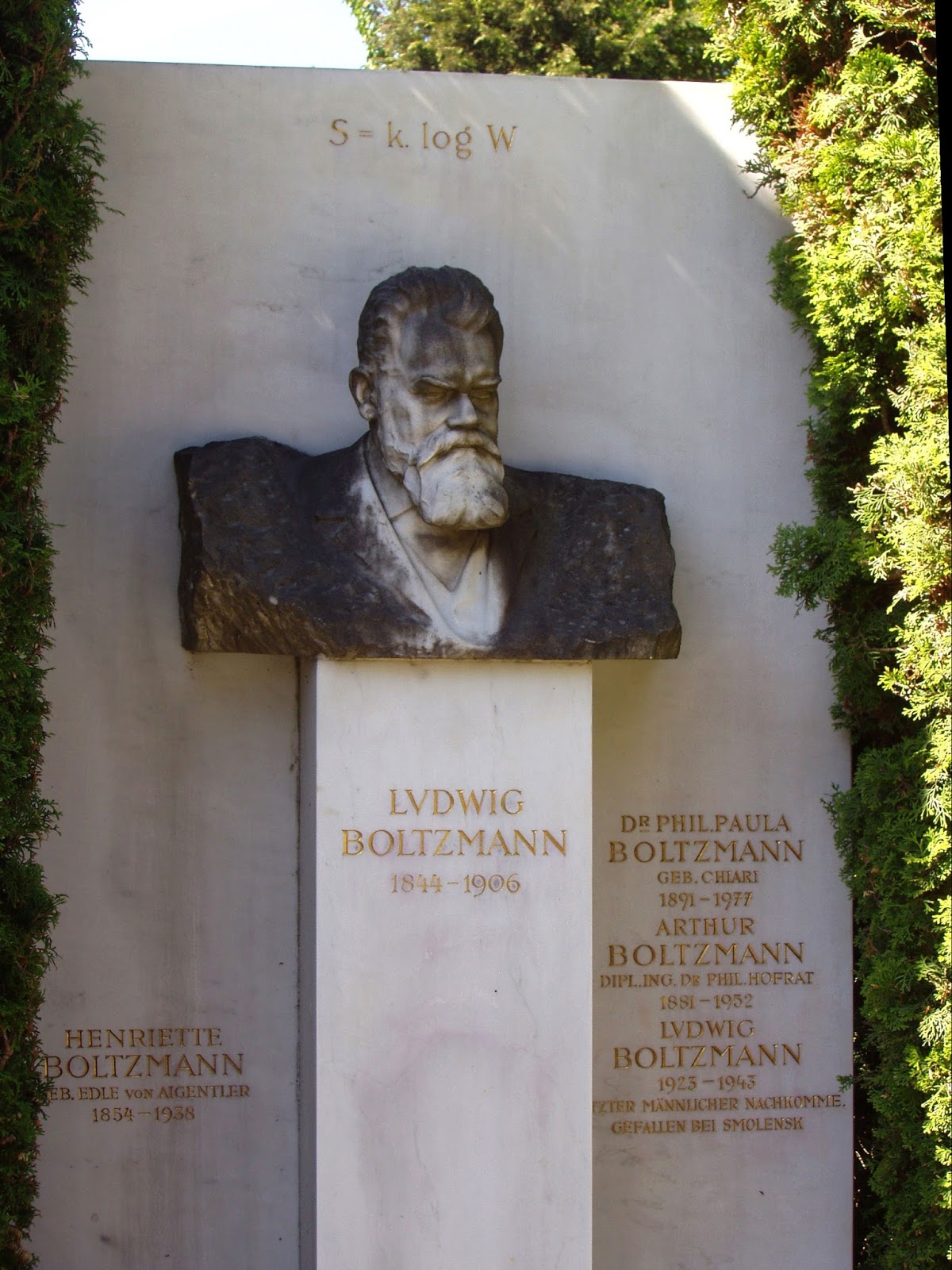
Newton's laws reigned supreme for 300 years and met with spectacular success (barring little exceptions such as the motion of Mercury). While Newtonian mechanics dealt with dynamics of moving bodies, the theory was extended to the study of the motion of bulk matter such as fluids by people like Bernoulli, d'Alembert, and Leonhard Euler. The Industrial Revolution brought steam engines and factories into the scene. People became interested in macroscopic properties of matter such as heat, temperature, pressure, and their relationship to energy and work. Through the work of Maxwell and Boltzmann thermodynamics was shown to be a manifestation of the statistical properties of atoms that they believed were the microscopic constituents of matter. Maxwell and Boltzmann developed the kinetic theory of gases and provided a statistical distribution of velocities of atoms in an idealized gas as a function of the temperature of the gas. Boltzmann's famous equation named after him relates the entropy of a system (a measure of the macroscopic disorder of the system) to the logarithm of the number of possible "micro-states" of the system. The second law of thermodynamics postulates that entropy of a system almost always increases, meaning the disorder of a system tends to increase. A subject of great controversy during Boltzmann's time was the atomic theory of matter. While Maxwell and Boltzmann were firm believers in the atomic hypothesis and used it to explain macroscopic phenomena, some influential physicists and philosophers of the day (such as Ernst Mach and even initially Max Planck) were opposed to such a concept because atoms were not observable at that time. So much so that it drove the depressive Boltzmann to commit suicide in 1906. It was only when Einstein in 1905 and Jean Perrin in 1908 demonstrated theoretically and experimentally that the phenomena of Brownian motion could be used to compute the sizes of atoms that the atomic theory became widely accepted. Boltzmann's entropy equation is carved on his gravestone in Vienna.
The Faraday-Maxwell Theory of Electromagnetism
Statistical mechanics showed that the thermodynamic behavior of matter was fully compatible with Newtonian mechanics since it ultimately involved the statistical behavior of atoms moving according to Newton's laws. However, in the latter half of the 19th century, largely due to the experiments of Michael Faraday, the phenomena of electricity and magnetism were found to not fit Newton's perfect mechanistic scheme. Through a remarkable series of experiments, Faraday provided an almost complete albeit non-mathematical description of electricity, magnetism, and their relationship to each other. More importantly, the subject saw the establishment of the abstract concept of a "field" in physics. The electromagnetic "field" is an abstract entity that permeates the space around an electrical or magnetic material. One can draw lines of force to visualize them, but they do not represent any material substance or a medium (something that bothered many scientists of the day including Lord Kelvin who accused Maxwell of resorting to mysticism). The application of mathematics (especially vector calculus ) to Faraday's experimental results, resulted in Maxwell's beautiful set of equations that completely described electromagnetic phenomena. Maxwell's equations describe the spatial and dynamic properties of the electric and magnetic fields as functions of each other and as functions of charges and currents. It is the first known instance of unification of two fundamental forces of nature (a theme that continues to occupy physicists to this day). The most spectacular outcome of Maxwell's field theory of electromagnetism was his startling insight that light is an electromagnetic wave. Light was known to be a wave since the early 1800s due to the work of Thomas Young on light interference and diffraction. Maxwell noticed that his mathematics produced a set of wave equations whose velocity factor (computed from the constants of electrical permittivity and magnetic permeability) matched exactly the empirically known speed of light. He then made a dramatic conceptual leap, when he postulated that in fact, light is nothing but an electromagnetic wave. This deep insight was later experimentally verified by Heinrich Hertz and led to the development of much of modern radio and wireless technology. It also set the stage for the twin revolutions of Relativity and Quantum Mechanics in the early part of the 20th century. It is remarkable that what was once simply an object of curiosity at the time of the Greeks, namely the behavior of materials like amber and lodestone eventually turned out to be one of the most fundamental and ubiquitous forces of nature. The solidity of materials is due to the perfect match between the positive and negative charges in the atom and the quantum effects that prevent them from collapsing into each other. All chemical processes can be described in terms of electrostatic phenomena. The neurons in the brain send messages through electrical signals and the human heartbeats due to the electrical impulses sent by the sinus node (a cluster of cells in the upper right chamber of the heart). Most of the modern technology including electronics and electrical systems are the outcome of Maxwell's equations. Most of life and human experience can arguably be described in terms of electromagnetic phenomena. Richard Feynman had this to say in his famous lectures: "From a long view of the history of mankind—seen from, say, ten thousand years from now—there can be little doubt that the most significant event of the 19th century will be judged as Maxwell’s discovery of the laws of electrodynamics. The American Civil War will pale into provincial insignificance in comparison with this important scientific event of the same decade."